


The South Island, also known as the “Mainland”, is New Zealand’s largest island. It is separated from the North Island by Cook Strait to the north and from Australia by the Tasman Sea to the west. It covers approximately 150,000 square kilometres, or 56% of New Zealand’s total land area, and has a population of approximately 1.257 million as at June 2025, accounting for 24% of the national population.
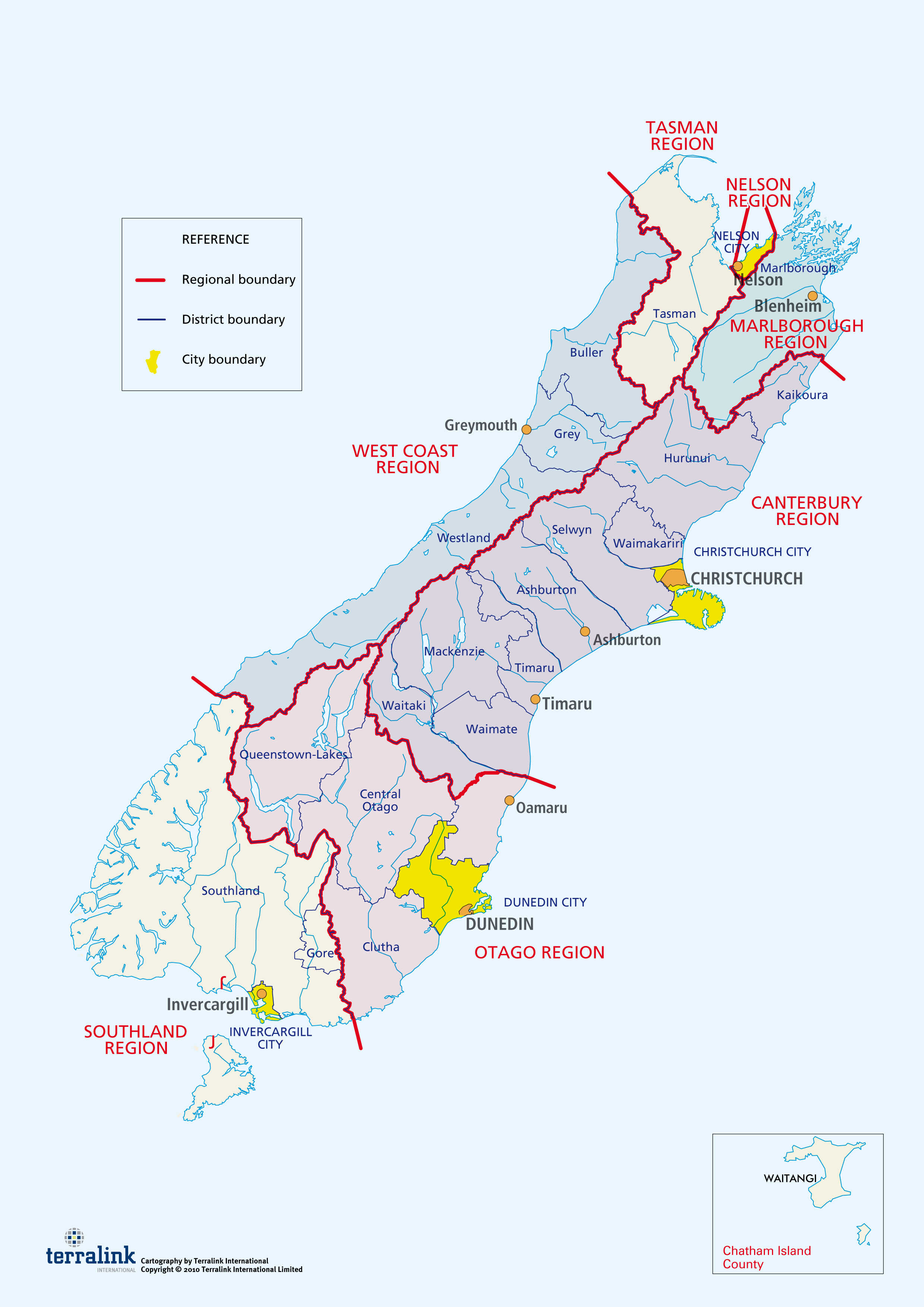
Its administrative divisions comprise four regions—Canterbury, Otago, Southland and the West Coast—and three unitary authority areas—Tasman, Nelson and Marlborough. Together, these comprise four city councils and 19 district councils, excluding the Chatham Islands. Major cities include Christchurch, Dunedin, Invercargill and Nelson.
Historically, the South Island was an important area for Māori settlement, migration and trade. From the mid-19th century, European settlers gradually established settlements in Nelson, Otago and Canterbury. Gold discoveries in Otago and on the West Coast in the 1860s attracted large numbers of migrants from Europe, Australia and China, driving the development of Dunedin, Arrowtown and other settlements.
Major industries include agriculture and pastoral farming, tourism, fishing, leather production, food processing and manufacturing. The island accounts for 23% of New Zealand’s gross domestic product, according to March 2025 figures. As a world-renowned agricultural and pastoral region, the South Island specialises in wheat cultivation and sheep and cattle farming, supported by small and medium-sized agricultural processing and dairy manufacturing businesses. It also has abundant resources, including gold, coal, oil, natural gas and timber, much of which remains undeveloped, offering substantial economic potential.
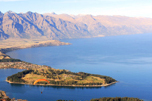
The South Island is renowned for its spectacular natural scenery and wide range of outdoor activities. Christchurch is its largest city and an important transport and tourism gateway. Queenstown is known for skiing, bungy jumping, jet boating and mountain sports. Milford Sound, Aoraki Mount Cook, Lake Wānaka and Lake Tekapo attract large numbers of international visitors each year. The island also offers renowned walking tracks, including the Milford, Routeburn and Kepler Tracks, as well as stargazing, birdwatching, coastal adventures and wine tourism.
The South Island has three public universities. The University of Otago is New Zealand’s oldest university and has the highest net assets; its dentistry, pharmacy and physiotherapy programmes are influential in the South Pacific. The University of Canterbury has particular strengths in engineering and the natural sciences, while Lincoln University specialises in agriculture and horticulture. Approximately 7,000 Chinese students currently study in the South Island.